
Concrete Jungles Bloom: How Urban Farming is Reshaping City Landscapes and Lives
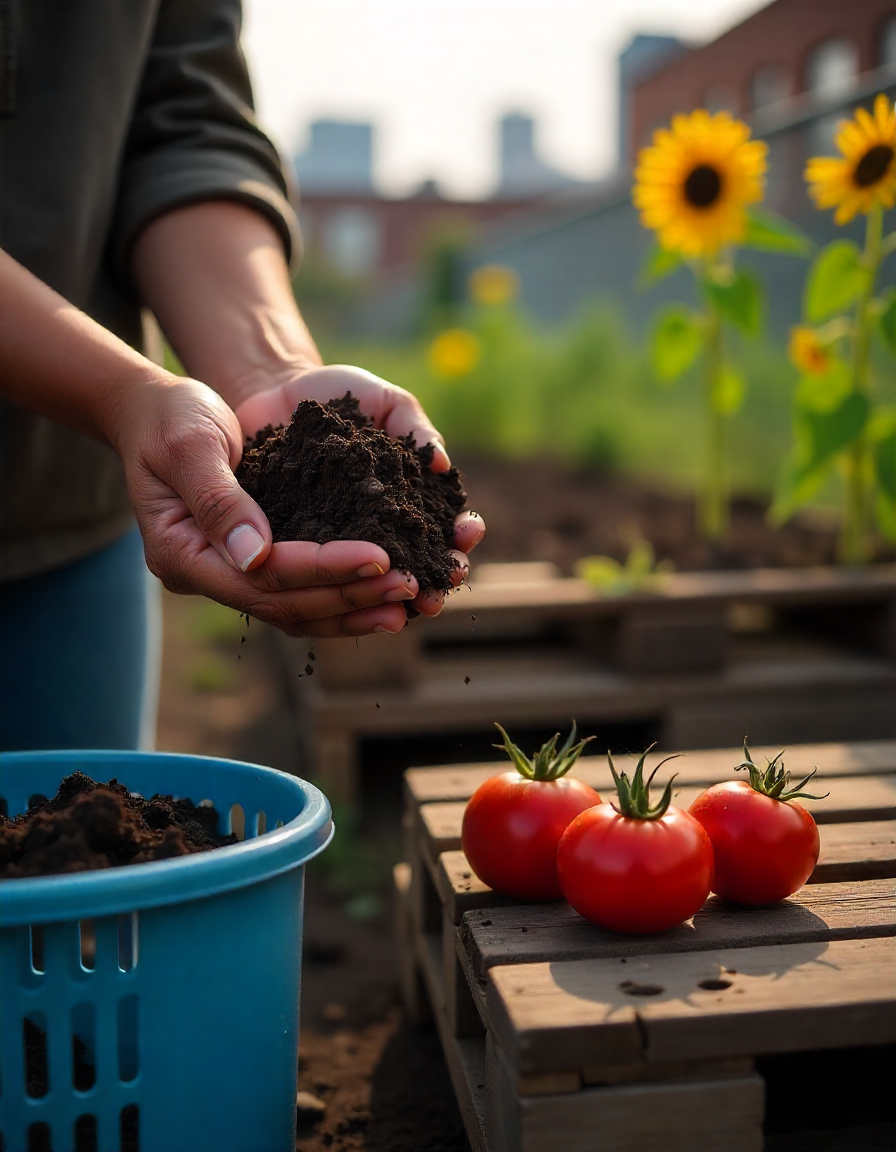
The rhythmic thud of a hammer against wood echoes across a once-vacant Detroit lot. Maria Rodriguez wipes sweat from her brow, surveying the raised beds taking shape where abandoned cars used to rust. “This isn’t just about vegetables,” she says, gesturing toward the neat rows of seedlings. “It’s about putting roots back in concrete.” Across America’s urban centers, a quiet revolution is underway as city dwellers transform vacant lots, rooftops, and even abandoned buildings into thriving agricultural spaces. This movement goes far beyond community gardens—it’s reshaping local economies, food systems, and neighborhood identities.
In Philadelphia, the Urban Creators organization has converted a two-acre trash-strewn lot into Life Do Grow Farm, producing over 5,000 pounds of food annually. What began as a cleanup effort by local teenagers has evolved into an educational hub where neighbors learn sustainable farming techniques while accessing fresh produce in an area previously designated a food desert. The farm now hosts weekly farmers’ markets, cooking classes, and youth employment programs. “We’re growing food, yes, but we’re also growing leaders,” explains farm director Kirtrina Baxter. “The kids who started this are now running workshops across the city.”
The economic impact of these initiatives surprises many skeptics. A 2023 study by Johns Hopkins University found that urban farms in Baltimore generated $3.7 million in annual economic activity through direct sales, value-added products, and job creation. More significantly, every dollar invested in urban agriculture returned $2.60 to the local economy through reduced healthcare costs, increased property values, and crime reduction. In Milwaukee, Growing Power’s vertical farming systems demonstrated how intensive urban agriculture could yield up to $200,000 per acre annually—compared to $600 for conventional rural farms—by focusing on high-value microgreens and herbs sold directly to restaurants.
Climate resilience has become another driving force. New York’s Brooklyn Grange operates the world’s largest rooftop soil farms, spanning 5.6 acres across two buildings. Their green roofs absorb over one million gallons of stormwater annually while reducing urban heat island effects. During Hurricane Ida, while streets flooded below, their farms remained operational, providing food when supply chains collapsed. “Rooftop farms are infrastructure,” says co-founder Gwen Schantz. “They manage water, cool buildings, produce food, and create green space—all on underutilized real estate.”
Innovative farming technologies are making urban agriculture more viable than ever. Singapore’s ComCrop uses vertical hydroponic systems in converted warehouses to produce leafy greens using 95% less water than traditional farming while yielding 10 times more per square foot. Their automated systems monitor nutrient levels, light, and temperature via smartphone apps, allowing precise control with minimal labor. “We’re not replacing rural farms,” says CEO Allan Lim. “We’re complementing them by growing what doesn’t transport well right where people live.”
The social benefits extend beyond nutrition and economics. In Chicago’s Englewood neighborhood, once notorious for violence, Growing Home’s urban farm has become a safe gathering space. Their transitional jobs program employs individuals with barriers to employment—formerly incarcerated people, homeless youth, recovering addicts—teaching farming skills alongside financial literacy and conflict resolution. “Working the land heals,” says program director Olivia Herron. “There’s something powerful about nurturing life from seed to harvest that rebuilds self-worth.”
Policy barriers remain significant. Zoning laws often classify urban agriculture as commercial or industrial rather than agricultural, creating permitting nightmares. Water access can be prohibitively expensive, and soil contamination requires costly remediation. Progressive cities are adapting: Boston’s Article 89 zoning reform explicitly supports urban agriculture, while Seattle’s P-Patch program provides city land at $1 per year to community gardeners. Federal legislation like the Urban Agriculture Act proposes grants for infrastructure and research, but progress remains slow.
The most successful urban farms integrate multiple functions. Pittsburgh’s Hazelwood Green project transformed a 178-acre former steel mill site into a sustainable neighborhood featuring farms, renewable energy, and affordable housing. Their aquaponics system raises fish while growing vegetables, with waste from each nourishing the other. “We’re creating circular economies,” says project manager Rebecca Flora. “Nothing gets wasted, everything has value.”
Corporate partnerships are emerging as unexpected allies. Microsoft’s campus in Redmond, Washington, now features rooftop gardens supplying its cafeterias, while General Mills supports urban wheat farms in Minneapolis for its local baking initiatives. These collaborations provide capital and market access while helping companies meet sustainability goals. “It’s not philanthropy—it’s smart business,” says Microsoft’s sustainability director Lucas Joppa. “Fresh food improves employee wellness, and green spaces boost productivity.”
The future of urban agriculture may lie in its integration with buildings. Architectural firms like KieranTimberlake are designing structures with built-in growing systems—hydroponic walls, algae bioreactors, and mushroom cultivation chambers. Their proposed “Living Building” in Philadelphia generates all its own food, water, and energy while processing waste on-site. “Buildings shouldn’t just consume resources,” says principal Stephen Kieran. “They should produce them.”
As cities worldwide grapple with population growth and climate change, urban farming offers more than just food—it provides resilience, community, and reconnection to natural cycles. In Detroit, Maria Rodriguez watches neighborhood children harvest their first tomatoes, their faces alight with wonder. “They’ve never seen food grow before,” she says softly. “Now they understand it doesn’t come from plastic packages in supermarkets. That understanding changes everything.”
The concrete jungle is indeed blooming, one vacant lot, one rooftop, one seedling at a time. In the spaces where cities once discarded their past, communities are now cultivating their future—proving that with vision and determination, even the most hardened urban landscapes can be brought back to life.